Honeycomb: The World Beyond Bioengineering on Sota7
Grafting, allogamy, and lab work for Hennessy’s research in Honeycomb: The World Beyond.
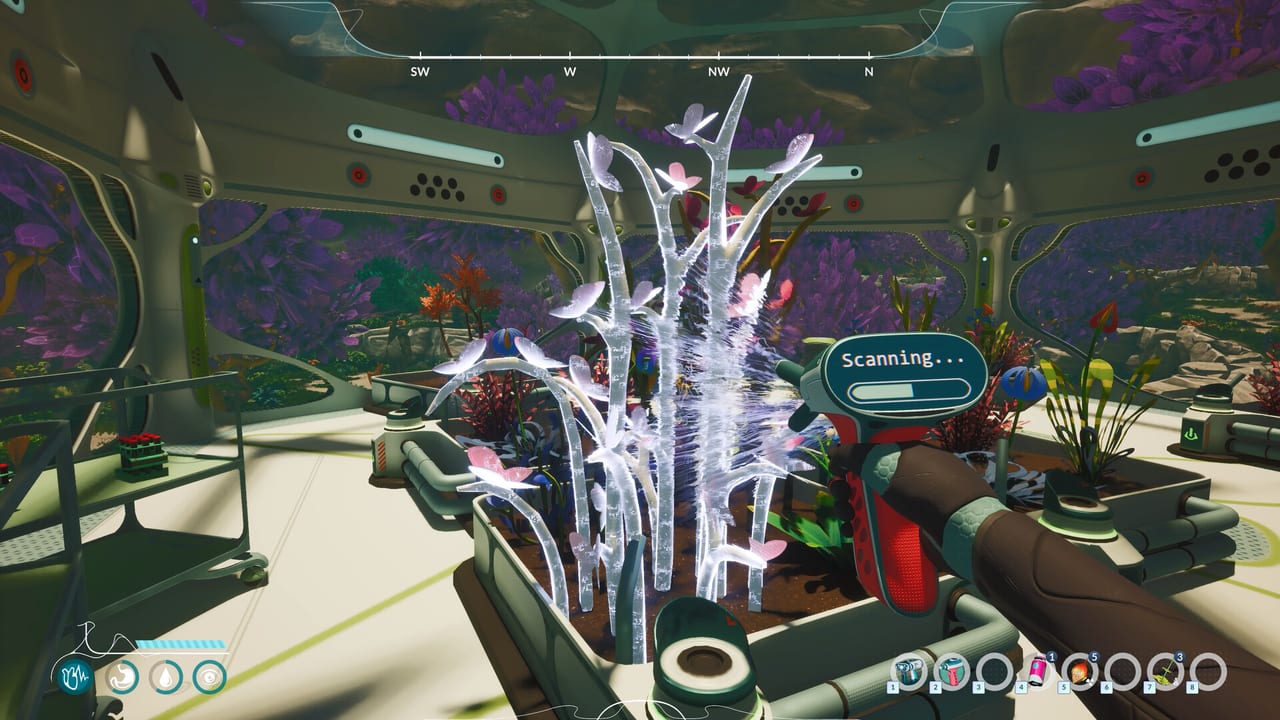
Bioengineering is the reason Honeycomb: The World Beyond exists. Combat sandboxes give you a multi-tool and a skill tree. Frozen Way gives Hennessy a lab and two real botanical techniques: grafting (joining tissues) and allogamy (cross-pollination between distinct specimens). The fantasy is that a hybrid born on Sota7 might help Earth’s ecological collapse. This guide is the practical loop. Pair it with the plant tier list, the animal list, and base building so the grow pod has a room to live in.
The scientific method, as a game loop
Press coverage of the studio’s tools is consistent. You do not unlock a recipe book by killing a boss. You:
- Observe. Scan flora and fauna until the database has a name and a warning. Curiosity without a scan is how you meet a hostile.
- Extract. Use specialized instruments — chisels, secateurs, sampling devices — each with a job. Do not expect one gadget to harvest everything.
- Replicate. Grow pods and lab devices copy what you brought home.
- Combine. Plants go through grafting and allogamy. Animals can be crossed only with the same species; Frozen Way said they refused a cartoon Punnett-square zoo.
If a step fails, the failure is data. Note which parent plants you used. The demo is long enough for one attempt. The full client is where you iterate.
Plants: grafting and allogamy
Grafting is agricultural, not magic. You join tissue from one plant to the rootstock of another. In Honeycomb that is how properties move: nutrition, resilience, maybe a trait you need for a later hybrid. Allogamy is cross-pollination, the way flowering plants mix genetics in the real world. The lab grow pod is the controlled greenhouse where those steps happen instead of hoping two wild plants flirt in a swamp.
Practical habits:
- Scan before you cut. Secateurs on an unknown specimen can waste a rare sample.
- Carry more than one parent. A single leaf is not a breeding program.
- Build the pod near water and power. Base building covers pumps and solar; a dead generator mid-graft is a wasted trek.
- Treat The Valley as a kindergarten for common parents. Save The Pass specimens for when the lab can actually use them. Official surveys say Pass flora feeds advanced crafting, nutrition balance, and hybrid paths you will not see on the coast.
Earth Filoy, a fruit tree from The Pass with orange plum-like fruit that can be eaten raw, is an example of a late plant that is food and a research ingredient. Solavia appears in publisher shorts as beautiful, useful, and a little unpredictable. Do not assume every colorful tree is a snack. Survival is where you keep the ones that are lethal off the dinner plate.
Animals: same species only
Creature work is slower on purpose. The GDC 2025 interview made the rule plain: you only cross animals that share a species. You are not here to invent a flying wolf-plant. You are here to push traits inside a family — size, coat, temperament, maybe a research flag.
Field surveys already name personalities:
- Lucuma Camilla — framed as friendly in the Valley survey.
- Scorchweaver — framed as hostile in the same log. Do not “pet to win.”
- Azurite Lonebid — a large caniform in the cooler Pass, blue coat, clawed forelimbs. Endgame research, not a starter mount.
Some animals tolerate you. Some defend turf. Rock Paper Shotgun’s older preview mentioned a shaggy unicorn-like creature that is harmless until you cross its ground. The tranquilizer on the official feature list is for the second category. Killing is not the progression hook.
Scan from a safe distance, sample when the entry says the species will allow it, and only then think about a breeding pair. If you cannot identify a silhouette, back up and read biomes for the zone’s risk label.
What “saving Earth” means in the UI
The story says Hennessy must find or create the plant that helps home. In play that is a reason to keep running experiments rather than a separate moral-choice menu. Each hybrid is a bet: maybe this graft is the one EON Corp wanted, maybe it is just better trail food. Keep a personal log. The game will not remember your hunches as clearly as you will.
IVS blueprints and lab devices are the other half of “being qualified.” Steam copy calls you EON-certified. That is flavor until the lab is built. Without grow pods, water, and a roof, you are a tourist with a scanner. Build first, splice second.
Session plan for lab days
A good research day on Sota7 looks like this:
- Morning: scan a new parent in a zone you already survive. Check plant rankings so you are not chasing a decorative shrub.
- Midday: return, water the base, start a graft or allogamy cycle.
- Afternoon: while it runs, repair power, craft a tool, or walk a short loop for animal scans.
- Evening: record the output, eat, restore immunity, sleep in the base. Survival explains why those meters are slow on purpose — so the lab can be the action.
If you are still in the demo, compress that into one cycle. If you are preparing for launch day, this is the loop you will run for weeks.
When a hybrid disappoints, change one parent at a time. When a zone starts killing your samples, you do not need a bigger gun; you need a better route from biomes and a calmer read of the animal list.
Frequently Asked Questions
Quick answers to the most common questions.
What are grafting and allogamy in Honeycomb?
Grafting joins plant tissues. Allogamy is cross-pollination between specimens. Both run in lab grow pods after you scan and sample. See the loop above and base building for the room they need.
Can I cross any two animals?
No. Frozen Way limited animal crosses to the same species. Use the animal tier list to learn temperaments before you approach.
Do I need a base to bioengineer?
Yes. Grow pods, water, and power live in your lab. Start with getting started and base building.
Which plants should I sample first?
Valley species you have actually scanned. Save Pass specialists such as Earth Filoy for later. Rankings sit on the plant tier list.