Honeycomb: The World Beyond Sota7 Wildlife: Behaviors and Etiquette
Named creatures, temperament classes, and the field rules that keep your samples in your bag.
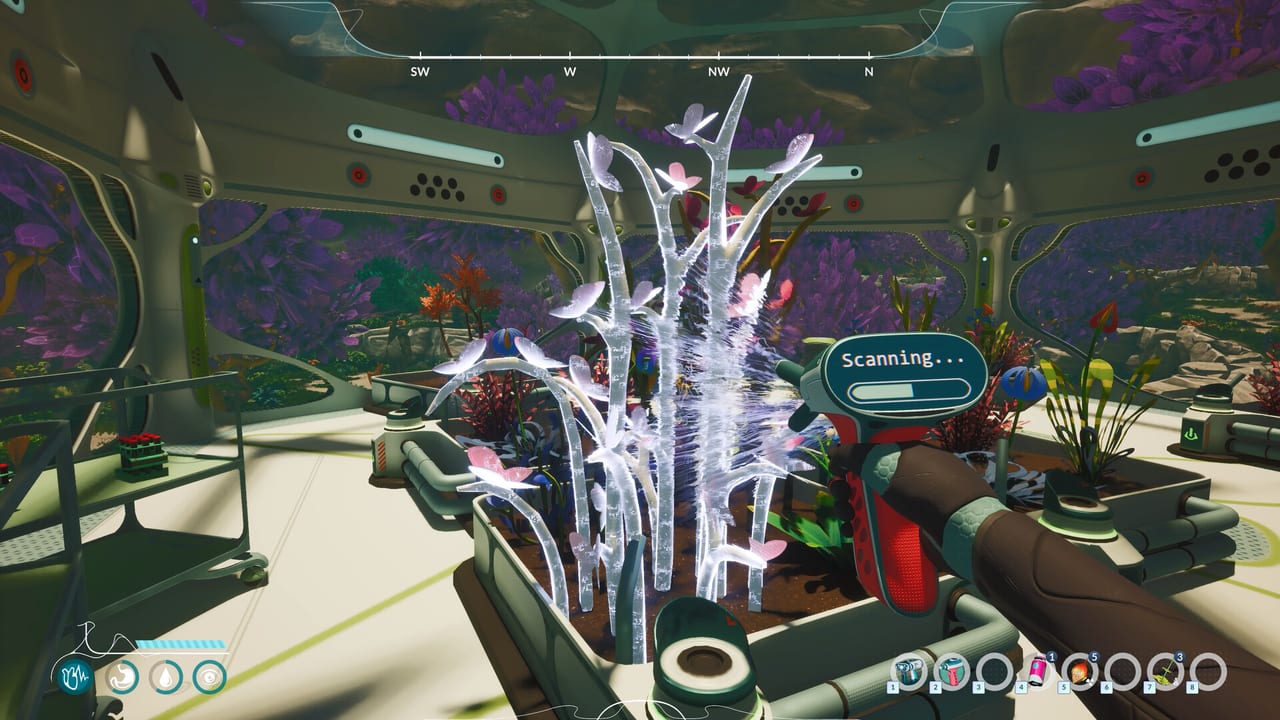
Honeycomb: The World Beyond presents wildlife as something between a research opportunity and a liability. The studio has drawn a hard line on non-violence — you do not kill your way through Sota7 — but that does not mean the planet is a petting zoo. Understanding creature temperament, movement patterns, and warning signs is what keeps the lab’s sample bag full and the base intact. This guide covers named species, behavioral classes, and the etiquette that separates a productive field day from a respawn at the landing pod.
Named species and their documented behaviors
The studio has named only a handful of creatures in official communications. More will surface after launch. Until then, this page tracks what Frozen Way has actually said, not speculation.
Lucuma Camilla — Framed as friendly in Survey Log #2 (The Valley). Described as tolerant in publisher shorts. This is the friendly silhouette in official marketing. Approach for scanning; do not assume every other creature shares her temperament. She is the teaching example, not the rule.
Scorchweaver — Framed as hostile in the same Valley survey. Lives in the low-risk starting zone, which is the design lesson: low risk is not zero. Treat with caution regardless of how cute the thumbnail looks. The tranquilizer is the correct response when retreat is not an option.
Azurite Lonebid — Named in Survey Log #4 (The Pass). A large caniform with muscular build, clawed forelimbs, and a deep blue coat with pale irregular spots. The prose calls it a specialist inhabitant of the cooler reaches of the pocket. This is not a Valley walk. Pack immunity pumps and the tranquilizer before you enter The Pass.
Temperament classes
Beyond named species, the game assigns creatures behavioral labels that determine how you interact:
Tolerant — The creature will allow close approach for scanning and sampling. Lucuma Camilla is the named example. Treat all unknown tolerant-label creatures as research subjects until the database says otherwise.
Territorial — The creature defends a radius around its nest or food source. Warning signs include oriented stance changes and vocalization. Detour is the recommended response. The tranquilizer is for when the detour is blocked by geometry.
Hostile — The creature will close distance and attack. Scorchweaver is the named example. This class is not common in the marketing, which is itself meaningful: the game wants you to feel Sota7 is observational, not combative. When hostile encounters happen, the tranquilizer is the tool, not the rifle.
Scanning etiquette
The scanner is your primary research tool. Rules that keep it useful:
- Scan before you approach. The database is cheaper than a hospital visit. If the entry is incomplete, back up and observe.
- Read the temperament field. Tolerant, territorial, and hostile are three different conversations.
- Watch for oriented stance changes. A creature that turns to face you is communicating. That is not a photo opportunity — that is a warning.
- Never sample a hostile at close range. Extraction requires proximity. If the creature is not tolerant, the proximity will cost you.
The tranquilizer: what it does and does not do
The advertised tranquilizer dart gun is the game’s solution for wildlife that will not yield a path. It is not a weapon; it is a negotiation tool. In practice it buys you a window of reduced alertness — not indefinite compliance. Practical notes:
- Tranquilize only when detour is impossible and the path is mandatory.
- After the dart lands, move quickly but do not sprint. Sprinting attracts attention even from dazed creatures.
- Do not use the tranquilizer as a combat substitute. It does not kill, but it also does not guarantee safe passage.
- Store darts at the base tool wall. Forgetting them is a common field mistake.
Same-species breeding and nests
Animal work is intentionally narrow: you only cross animals of the same species. This is a hard studio rule, not a technical limitation. Breeding pairs produce offspring with mixed traits from both parents. The nest is where this happens; do not build a base on top of an active nest.
Behavioral note: some creatures in older previews are described as harmless until you cross their ground. Build awareness of where you place walls. A beautiful base on a patrol route is a daily conflict.
What this page will not cover
This page does not name creatures Frozen Way has not named. It does not assign behaviors to silhouettes without official confirmation. When new creatures appear in patch notes or official posts, this page should update through the news log. Until then, the rule is: scan everything, trust the database, and back up when the silhouette does not match a known tolerant entry.
Creature behavior FAQ
Is Lucuma Camilla the only friendly creature?
She is the named friendly example in official communications. Other creatures may be tolerant; the database will tell you. Do not generalize from one example.
How do I deal with territorial wildlife?
Detour first. Tranquilize second, only when geometry blocks a safe alternative. Read the survival guide and animal tier list before you enter mixed-danger zones.
Should I bring anything specific for creature encounters?
Immunity pumps (always), the tranquilizer (in Headlands and beyond), and empty sample slots (to collect tissue without killing). See the survival checklist.
Can I pet animals in Honeycomb?
Scorchweaver will not appreciate the gesture. Lucuma Camilla may tolerate proximity. The studio’s non-violence policy is about gameplay design, not guaranteed creature affection.
Frequently Asked Questions
Quick answers to the most common questions.
Is Lucuma Camilla the only friendly creature?
She is the named friendly example in official communications. Other creatures may be tolerant; the database will confirm. Do not generalize from one example.
How do I deal with territorial wildlife?
Detour first. Tranquilize second, only when geometry blocks a safe alternative. Read the survival guide and animal tier list.
Should I bring anything specific for creature encounters?
Immunity pumps (always), the tranquilizer (in Headlands and beyond), and empty sample slots. See the survival checklist.
Can I pet animals in Honeycomb?
Scorchweaver will not appreciate the gesture. Lucuma Camilla may tolerate proximity. The non-violence policy is about gameplay design, not guaranteed creature affection.